
FOR IMMEDIATE RELEASE
Sept. 8, 2026
Media contacts
Lesa Griffith
808-532-8712
lgriffith@honolulumuseum.org
Lance Rae
808-781-1743
lance@tlcpr.com
VITAL CONNECTIONS:
ART & THE BRAIN
VITAL CONNECTIONS:
ART & THE BRAIN
HoMA EXHIBITION EXPLORES CREATIVITY AND HUMAN HEALTH THROUGH ART AND BRAIN RESILIENCE PROGRAMS
WHAT: Vital Connections: Art & the Brain
WHEN: Sept. 12, 2026-Jan. 10, 2027
WHERE: Honolulu Museum of Art, 900 S Beretania St., 808-532-8700
HONOLULU, HAWAI‘I—This fall the Honolulu Museum of Art presents Vital Connections: Art & the Brain, a major exhibition exploring the relationship between creativity and human health. On view from September 12, 2026, through January 10, 2027, the exhibition brings together modern and contemporary artworks, immersive environments, and recent neuroscience research to examine how aesthetic experiences can shape emotion, attention, memory, and wellbeing.
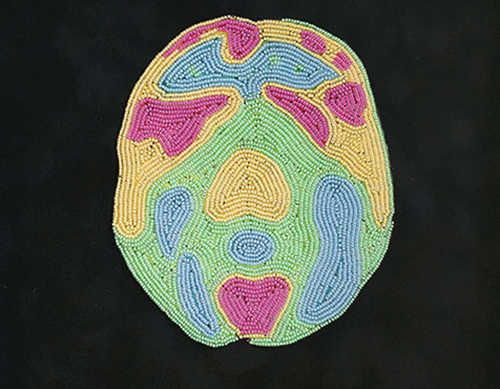
Ruth Cuthand (American, b. 1954). PTSD, 2023. Glass beads, thread, backing. Courtesy the Gallery/art placement inc.
Developed by HoMA director of curatorial affairs Catherine Whitney in collaboration with clinicians, neuroscientists and neuro-architects from Honolulu’s Brain Health Applied Research Institute (B+HARI), Vital Connections draws on the latest findings in neuroscience to create an immersive environment in which visitors will learn what art is doing to their minds and bodies as they experience it.
Featuring modern and contemporary art by international and Hawai‘i artists—including works by Bernice Akamine, Ruth Asawa, Chuck Close, Ruth Cuthand, David Hockney, Yayoi Kusama and Ming Ren—Vital Connections explores concepts ranging from artistic perceptionsto aesthetic experiences, examining how both can chemically rewire our brains. Audiences will experience the benefits of art by feeling calmed, restored, energized, and immersed in the present, while better understanding the science behind sensory perception, memory, and movement. The exhibition also shares practical methods for building better cognitive resilience through creating and experiencing art.
VITAL CONNECTIONS PROGRAMS
The exhibition is accompanied by a
full slate of talks and workshops that B+HARI developed to re-train the brain for
enhanced neuroplasticity and cognitive reserve. These workshops involve
reestablishing the center of balance through movement using the same neural
pathways involved in creating ideas and human intelligence. The workshops focus
on specific artworks that act as canvases on which to deepen imagination, cognitive
flexibility, and human intelligence. B+HARI was co-founded by Ma Ry Kim and Dr.
Kazuma Nakagawa, MD.
All programs are included with museum admission. Registration must be done in advance at honolulumuseum.org/events
Why
Art is Good for Your Brain: The Science Behind It
Saturday,
Sept 12 • 11am-12:30pm • Doris Duke Theatre
Dr. Hugo Spiers, professor of
cognitive neuroscience at University College Londo; neuro-architect and
co-founder of B+HARI (Brain Health Applied Research Institute) Ma Ry Kim; and
HoMA’s Director of Curatorial Affairs Catherine Whitney discuss how and why art
is good for our health.
The
Art & Science of Longevity: Creativity and Healthy Aging
Sunday, Nov 8 • 2-3:30pm • Doris Duke Theatre
Find out from three clinical
neuro-specialists—Dr. Kazuma Nakagawa, Dr. Brita Aramaki, and Dr. Courtnee Nunokawa—how
art is a critical tool to optimize brain health for longevity.
B+HARI SIGNATURE NEUROARTS GALLERY EXPERIENCES
Sept 20, Oct 4, Nov 21, Dec 6
Guests can experience
art in new ways through movement exercises and curated hands-on
activities led by B+HARI neuroarts specialists.
Twist Tradition into Life: A Hawaiian Lā‘i Lei Workshop
Sunday, Sept. 20 • 4:00-5:00 p.m. • Kīna‘u Courtyard
The timeless
art of lāʻī (ti leaf) lei making is an exercise in beauty, meaning, and
mindfulness. In this workshop led by Native Hawaiian cultural practitioner
Garrett Kam, guests will learn the traditional Hilo twist technique. As participants
create their lei, they will experience how the coordinated movements of the
hands and eyes engage some of the same brain networks responsible for
creativity, focus, fine motor control, visual-spatial awareness, and
mindfulness. The rhythmic process of twisting encourages calm attention while
strengthening the connection between thought and action.
In Hawaiian tradition, a lei is far more than something beautiful to wear. It is woven with intention, aloha, and the positive energy of its maker—transforming each twist into an expression of care, connection, and presence. This workshop invites people to explore how neuroscience and Native Hawaiian cultural wisdom both recognize that meaningful creation begins with mindful hands, an open heart, and a focused mind.
Art
Can Reveal What Your Body Already Knows
Sunday, Oct. 4 • 11:00 a.m.-12:00 p.m. and 2:00-3:00 p.m. • Gallery 28
Did you know that your body can
gather information through your five senses before you even realize it? This
session invites guests to a fun, hands-on experience that connects the mind and
body. Participants will explore how the brain keeps us balanced, remembers
sensations, and spots patterns. By understanding how the body communicates with
the brain, participants will get to experience art in a whole new way—starting
not just with what the eyes see, but with how the entire body feels.
Art
Can Be Bigger Than Yourself
Saturday, Nov. 21 • 11:00 a.m.-12:00 p.m. and 2:00-3:00 p.m. • Gallery 28
Awe is not
only an emotion. It is a measurable brain and body event. This signature activity
creates the conditions for awe to be felt in the brain and the body through works
or aesthetic experiences in the exhibition that tap our sense of connection to wider
planetary and ecologicalrealms. Participants will learn how to recall awe
deliberately. This gallery experience uses the science of awe, wonder, and deep
connection to calm the brain. It helps lower stress, opens the mind to new ways
of thinking, and quiets that non-stop, chattering voice in the head.
Ultimately, it is a practice in letting the vast beauty of the outside world
refresh and reshape who we are on the inside.
Art
Can Support Finding Your Flo
Sunday, Dec. 6 • 11:00 a.m.-12:00 p.m. and 2:00-3:00 p.m. • Gallery 28
Being “in the zone” (or a flow state)
isn’t about waiting for a sudden burst of inspiration. It is a real brain state
in which that critical, doubting internal voice finally quiets down. Itcan
occur when a challenge perfectly matches one’s skills and motivations, allowing
one to become lost in what they are
doing.
This experience uses artwork in the exhibition to help participants find and practice balance. By using the science of deep focus, calming the nervous system, and feeling a sense of wonder, Art Can Support Finding Your Flow is designed to show guests what it feels like when the brain is working effortlessly and feels fully alive.
Studio
Class: Art for the Mind
Oct. 10-Dec. 19 • 10 sessions • $305
tuition • HoMA School
Increasingly,
studies show that making and looking at art is good for your health and
longevity. Students can explore art making as a pathway to mindfulness,
connection, and personal well-being. Through ink blotting, printmaking,
ceramics, mixed-media collage, journaling, and more, participants will engage
in a variety of creative experiences designed to explore the relationship
between art and well-being. Visits to the exhibition will provide opportunities for reflection and
deeper engagement with the ways art can support health and wellness, informed
by current findings in neuroscience and psychology. Instructor Carmen
Donnerburg, who holds a master’s in clinical psychology and certification as a
Qualified Mental Health Associate discovered a love for studio art while
completing a minor at Oregon State University, as an intentional form of
“forced self-care.” She is interested in helping others explore the benefits of
using art as a means to slow down, step outside of thought, connect with
emotions, and as means to connect to community for the purpose of creating a
greater feeling of personal wellness.
Artists in the exhibition:
Bernice
Akamine, Ruth Asawa, Chuck Close, Henri-Edmond Cross, Ruth Cuthand, Sasha
Gordon, David Hockney, John Koga, Yayoi Kusama, Richard Misrach, Georgia O’Keeffe,
Ming Ren, Abigail Romanchak, Ellie Schmidt, James Seawright, Peter Sedgley, Viviane
Silvera, Jennifer Steinkamp, Thomas Struth, Emmi Whitehorse
About the curator
Catherine Whitney is HoMA’s
director of curatorial affairs. As the museum approaches its centennial in
2027, she is overseeing the transformation of HoMA’s permanent collection
galleries and injecting new energy and audience-based approaches into its
ambitious, diverse exhibition program. She previously was chief curator of the
Philbook Museum of Art and held positions at the National Gallery of Art in
Washington, D.C.
About the collaborators
Ma Ry Kim is an internationally known neuro-architect and co-founder of B+HARI. Based in Honolulu and London, her work sits at the intersection of neuroscience, architecture and community health. She is also the founder of I-ON Group, where she advances evidence-based design strategies that integrate neuroscience and social equity. She sits on the Inaugural Advisory Council for the Global Brain Care Coalition, established by the McCance Center for Brain Health at Harvard Medical School and Massachusetts General Hospital. She was HoMA’s inaugural scholar-in-residence.
Dr. Kazuma Nakagawa is a prominent neurologist and neurointensivist known for his expertise in stroke and neurocritical care, and co-founder of B+HARI. He leads the Neuroscience Institute at the Queen’s Medical Center in Honolulu and is the division chief of neurology and professor of medicine at the University of Hawai‘i John A. Burns School of Medicine. He has been recognized as a Fellow of the American Academy of Neurology and the American Heart Assocation.
Dr. Courtnee Nunokawa is a scientific faculty member of B+HARI and a leader in the integration of neuroplasticity and clinical practice. She brings profound clinical depth to B+HARI with her extensive experience serving populations that face high neurological burdens and complex social determinants of health, including veterans and incarcerated individuals. She is board-certified in primary care, lifestyle medicine, and neurofeedback rehabilitation.
Dr. Elim Ng is an architect whose work explores how environmental design shapes human experience and well-being. She views architecture as an artistic and ethical practice that supports comfort, safety, and long-term resilience. She holds a Master’s from Tongji University in Shanghai and a Doctorate of Architecture from the University of Hawai‘i at Mānoa.
Exhibition organization and
funding
Vital Connections: Art & the Brain is organized by the Honolulu
Museum of Art. Lead support for the exhibition is provided by Prince Waikiki.
Images available on request.
About the Honolulu Museum of Art
The Honolulu Museum of Art is Hawai‘i’s premier art institution, inspiring and uplifting the community through transformative art experiences. Founded in 1927 to reflect Hawai‘i’s multicultural makeup, today HoMA’s extraordinary collection of more than 55,000 works of art from across the globe spans 5,000 years.
Through its collection, innovative exhibitions, and programs, the museum is able to tell stories relevant to Hawai‘i and the world at large. It serves as a gathering place of learning and discovery, where visitors can encounter new ideas, explore diverse perspectives, develop empathy, and contribute to their well-being through art. Home to an art school, Honolulu’s last art house theater, two cafes, and a shop—just 10 minutes from Waikīkī—HoMA is a vital part of Hawai‘i’s cultural landscape committed to access for all.
Hours: Wednesday, Thursday, Saturday, Sunday 10am–6pm; Friday 10am–9pm
Admission: Adults $25; residents $15; free for youth 18 and under; free for SNAP beneficiaries and college students enrolled at any Hawai‘i state university or college.



Honolulu Museum of Art
900 S Beretania St
Honolulu, HI 96814
Honolulu Museum of Art School
1111 Victoria St
Honolulu, HI 96814
Communications: 808-532-8712
You are receiving this email because of your interest in the Honolulu Museum of Art.